Pressure from All Sides: ASEAN Hedging in Times of Great-Power Competition
By Georgia Kruger
In early February, Project 88, an organization dedicated to investigating “human rights abuses in Vietnam”, leaked a document from the country’s defense ministry. “The 2nd U.S. Invasion Plan”, internally released in 2024, warned officials to remain “vigilant to prevent the U.S. and its allies from ‘creating a pretext’ to launch an invasion of our country”. Hanoi’s unease highlights the complex security challenges southeast Asian states face. They are confronting an increasingly assertive China, especially in the South China Sea (SCS), amid concerns about U.S. backed “color revolutions” and possible military operations. These states are responding not by choosing a side, but by cultivating ties with both powers.
Policies pursued by ASEAN member states Brunei and Vietnam reflect this trend. While the two nations differ in size, economic capacity, and political system, they share a common goal: avoid overdependence on a single major power. For them, and other nations pursuing strategic hedging, multilateral institutions such as the Association of Southeast Asian Nations (ASEAN) have become crucial instruments for safeguarding their independence and security.
ASEAN—One Vision, Many Pressures
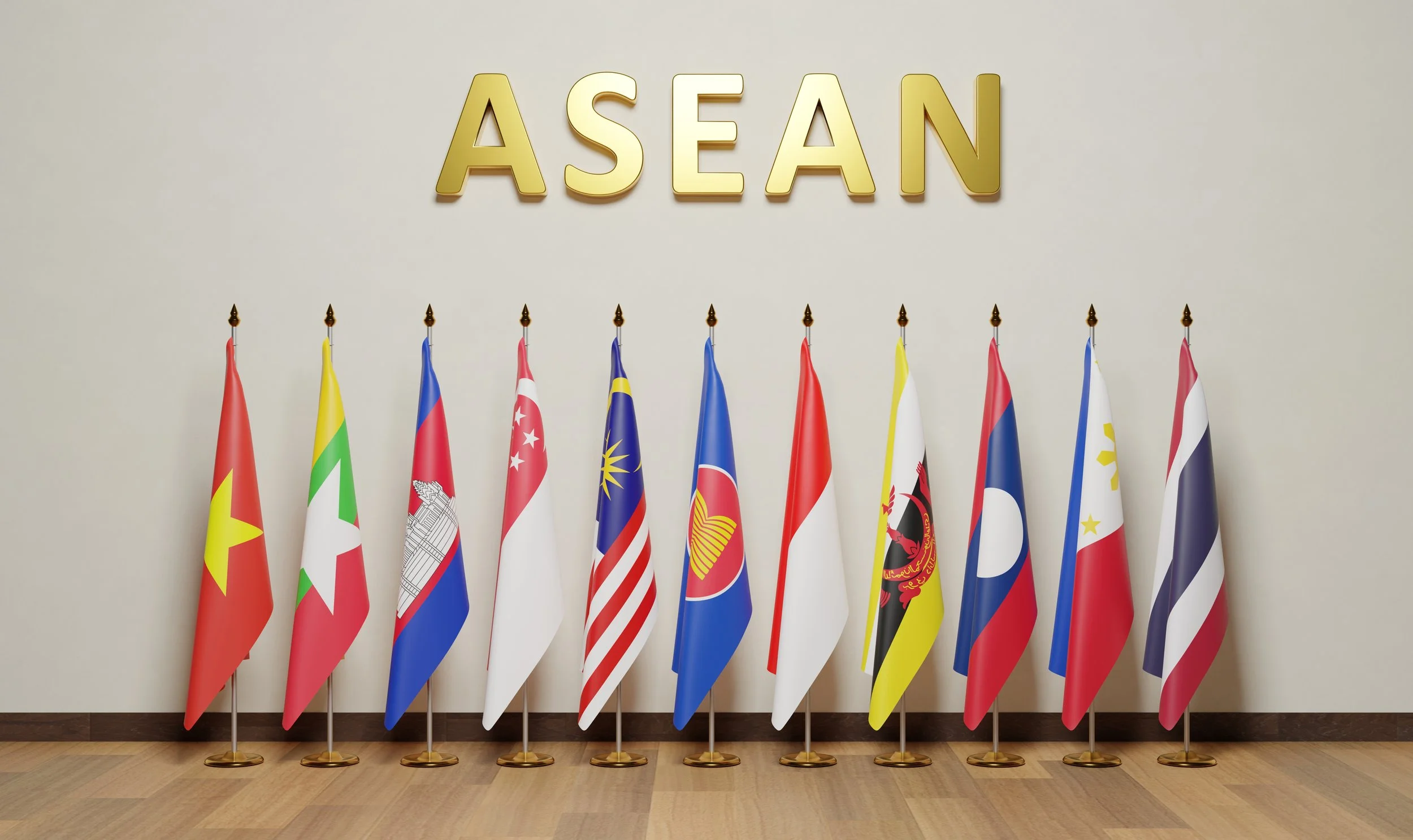
Founded in 1967, ASEAN now comprises 11 member states, ranging from regional powerhouses such as Singapore to Asia’s youngest nation, Timor-Leste. The organization, representing over 692 million people, has evolved into a significant regional institution. It offers its members both leverage when negotiating Free Trade Agreements and a framework for internal cooperation.
Such a forum is of growing importance as recent actions by Beijing and Washington, including Chinese airstrip construction in the SCS and U.S. interventions in Venezuela and Iran, have intensified geopolitical pressure on southeast Asian nations. Caught between the two, many states are struggling to preserve strategic autonomy. Here, ASEAN can serve as a key channel of communication that can be a diplomatic buffer and a platform for articulating regional interests.
Brunei—The Quiet Hedge
Brunei, ASEAN’s only absolute monarchy, is often described as a quiet claimant. Despite having overlapping claims in the SCS, including the Louisa Reef in its exclusive economic zone, the sultanate avoids direct confrontation with the region’s heavyweight, following a two-step approach. Brunei negotiates with China bilaterally, a method generally favored by Beijing, and simultaneously works within ASEAN to develop a binding Code of Conduct (COC) in the SCS. The COC would define appropriate behavior and conflict resolution mechanism.
This is, in part, the result of deep structural dependencies. The sultanate’s highly subsidized welfare system, covering housing, education and health care, is under financial pressure as national oil reserves decline. China, as an important partner for economic cooperation, relieves some of that stress. Beijing is behind the largest foreign direct investment project in Brunei, the Hengyi Petrochemical Company refinery, and aims to assist the sultanate’s diversification efforts.
Yet Brunei is not blindly aligning with China. By supporting negotiations for a COC, Brunei shows an interest in regional rules and cooperation. The sultanate also looks further afield for partners. It maintains security ties with the United Kingdom and is strengthening cooperation with the U.S. In 2022, Brunei announced the purchase of U.S.-made drones.
Vietnam—The Loud Hedge
Vietnam, in contrast, pursues a more assertive approach. It frequently criticizes Chinese actions in the SCS, invoking international law, and continues to modernize its navy and coast guard while leveraging ASEAN as a platform to raise its security concerns.
Vietnam pursues economic and security ties with both the U.S. and China. However, while public debate in Vietnam is largely muted, the recurring invocation of thoát Trung (“escaping China’s orbit”) signals public anxiety about overdependence. This distrust shapes how Hanoi engages with its giant neighbor to the north. The U.S., as the leaked 2024 document reveals, is not solely viewed as a friend and ally either. Vietnamese leaders worry about U.S.-backed “color revolutions”, fears shaped by historical experience and concerns about their own regime’s stability.
As a result, Hanoi engages with partners beyond the great powers, such as South Korea and the EU, while advocating for a more cohesive ASEAN to enhance southeast Asia’s influence on the global stage.
ASEAN’s Limits
Despite the region’s efforts, dependencies do arise, impacting foreign policy. A 2025 IMD Business School study found that no ASEAN member states, except Indonesia, impose countermeasures on Chinese state-subsidized exports. Beijing’s influence, particularly over smaller states such as Brunei, appears to be quietly growing, shaping the region’s decision-making dynamics.
ASEAN’s ability to counter this trend is limited. The institution faces persistent structural challenges, including its consensus-based nature that often leads to gridlock—a problem painfully familiar to the European Union.
Recognizing such constraints, Vietnam is among member states advocating for “creative, flexible, and innovative approaches, including in the decision-making process”, to ensure ASEAN remains impartial. Especially amid intensifying U.S.–China competition, the organization, too, has become an arena in which the great powers are managed and contested.