The Long and Winding Road: The EU and India Forge an FTA
By Marshall Reid
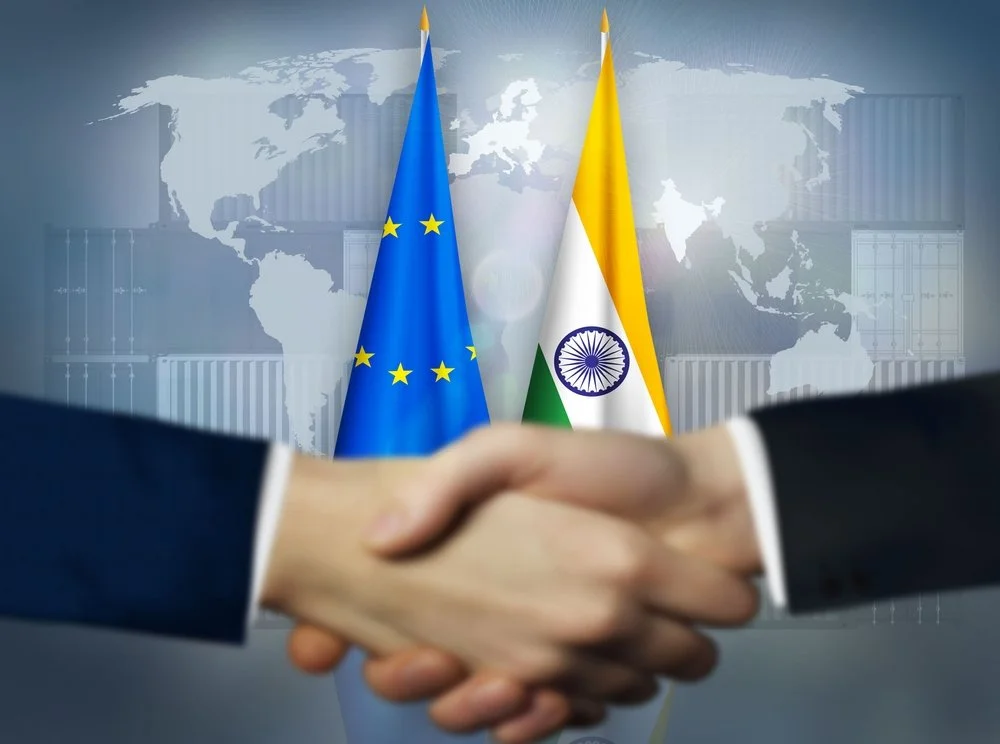
It finally happened. After decades of sporadic and often contentious negotiations, the EU and India have concluded a massive free trade agreement (FTA). The pact, described by European Commission President Ursula von der Leyen as “the mother of all deals”, will create one of the world’s largest areas of nearly tariff-free commerce. It encompasses trillions of euros in economic value for regions with a combined population of nearly two billion people and could fundamentally reshape global trade.
That the long-gestating agreement came to fruition in the age of Donald Trump is no coincidence. Since returning to office in 2025, the U.S. president has radically altered the global status quo. His aggressive, transactional approach to trade has inflamed tensions with partners and ushered in an era of economic protectionism. For the EU and India, two prominent targets of Trump’s economic ire, expanding bilateral trade has become more imperative than ever.
A New Deal
The concept of an EU-India FTA is far from new. Both parties have recognized for decades the immense potential of enhanced bilateral trade. For Brussels, India’s vast market, immense manufacturing capacity and rapidly developing infrastructure make the country a irresistible trade partner. New Delhi, in turn, has long been attracted to Europe’s wealthy population, high-profile luxury goods and massive investment potential. These complementarities have led to steady increases in bilateral commerce, with goods trade surpassing $135 billion in 2024-2025, eclipsing the $132 billion that India and the United States exchange.
Nevertheless, a deal long proved elusive since negotiations commenced in 2007. Despite strong interest from both sides, sectoral disagreements, byzantine regulatory regimes and entrenched trade barriers repeatedly stymied talks. As a result, many observers began to view them with growing skepticism.
Given the challenges, the agreement is a remarkable step forward. It is poised to eliminate or reduce tariffs on the vast majority of traded goods. India’s Ministry of Commerce and Industry says New Delhi has agreed to cut or remove tariffs on 96.6% of goods by value including, most notably, European cars. The auto sector was a chronic sticking point in negotiations. Meanwhile, the EU is set to reduce or eliminate 99.5% of its tariffs on Indian goods including critical products such as chemicals and textiles. The measures could have a seismic impact on bilateral trade.
The deal will now go to the European Parliament and the Indian parliament for a vote. But experts are urging caution. Several key issues remain in limbo, including “agricultural market access, geographical indications, and the EU’s Carbon Border Adjustment Mechanism”, noted former assistant U.S. trade representative L. Daniel Mullaney. These could result in a considerably more complex and prolonged approval process.
Why Now?
The FTA’s timing is hard to ignore. Two decades of fruitless negotiations suddenly produced a deal. The recent push was likely the product of a variety of factors, but the role of the United States cannot be understated. Trump has made no secret of its skepticism of the modern, globalized trade system and, since unveiling his “Liberation Day” tariffs in April 2025, has made a concerted effort to renegotiate bilateral trade agreements with many countries and multilateral groups. The EU and India, with their complex bureaucracies, relatively high tariff barriers and sizable trade surpluses with the United States, have frequently found themselves in the president’s crosshairs.
The agreement with New Delhi could provide Brussels with an invaluable alternative to the American market. EU policymakers have increasingly called for economic diversification, particularly as tensions with the United States and China have mounted. This, and Trump’s saber-rattling, undoubtedly contributed to the urgency of concluding a deal. If the two sides can implement it, European leaders will take a significant step towards their goal.