Breaking the Chain: Asia Turns to Renewables
By Marshall Reid
For Europe and North America, the closure of the Strait of Hormuz has been a headache. For much of Asia, it has been an earthquake.
Since the outbreak of the 2026 Iran War on February 28, global energy markets have been in a state of near-constant flux. Dual U.S. and Iranian blockades of the Strait have paralyzed shipping and reduced the flow of oil and natural gas to a trickle. These disruptions have been particularly impactful for nations in South and Southeast Asia, many of which rely heavily on Persian Gulf resources to meet their energy demands. Across the region, fuel prices have soared, markets have plummeted, and shortages have become the norm.
In national capitals like Jakarta and Manila, the Hormuz crisis has been a harsh wakeup call. It has exposed critical vulnerabilities in regional energy supply chains and threatened to reverse years of economic progress. While some states have responded by seeking alternative energy providers or returning to older power sources like coal, a growing number have opted to increase investments in renewable infrastructure.
Supply Chain Reaction
Nations of South and Southeast Asia are overwhelmingly dependent on the Strait of Hormuz for oil and natural gas. According to the International Energy Agency, Southeast Asia relies on the Middle East for approximately 60 percent of its crude oil exports and over a third of its natural gas imports. South Asia is even more exposed, with states like Pakistan and Bangladesh importing nearly all of their LNG from Persian Gulf countries.
The sudden Hormuz closure deprived these regions of vital energy imports, which swiftly led to economic disaster. Fuel prices rapidly climbed to unsustainable levels, leading several countries to declare a state of national emergency. Many places imposed rationing measures, while others experimented with expanding teleworking and shortening workweeks. Despite these efforts, multiple states experienced severe shortages and sporadic blackouts. As several commentators have noted, the costs of the crisis have fallen disproportionately on those of lower socioeconomic status, many of whom rely on cheap fuel to survive.
While states across South and Southeast Asia continue to grapple with the short-term impacts of the Iran War, many have begun taking steps to protect themselves from future shocks. To accomplish this, a growing contingent is turning to renewables.
Investing in the Future
Neither South nor Southeast Asia is a stranger to renewable energy. Recent decades have seen a steady stream of hydroelectric, solar, and wind projects as regional states have worked to meet surging energy demands. But progress has historically been slow and piecemeal, with coal, oil, and natural gas continuing to account for the majority of energy production. In the wake of the Hormuz crisis, however, countries are reevaluating their approaches.
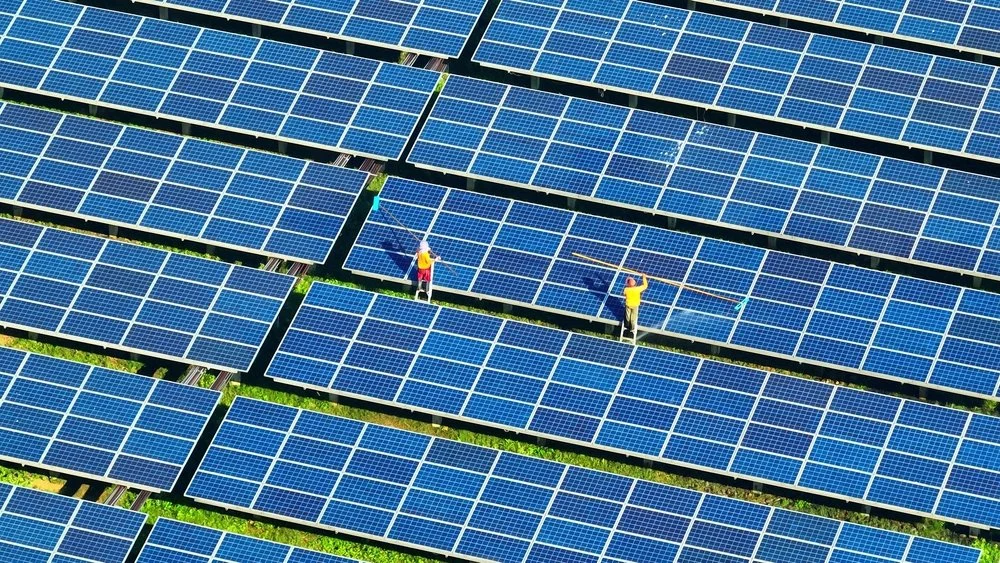
While states across the region have long recognized the potential value of renewable energy, the war appears to have galvanized a meaningful shift toward faster and more widespread adoption. In Pakistan, which began investing in Chinese solar panels after the 2022 Russian invasion of Ukraine, solar energy now accounts for 25 percent of household consumption. In the Philippines and Malaysia, rooftop solar panels have exploded in popularity. In maritime Southeast Asia, in particular, wind energy has also seen increasing investment. Recent advances in battery technologies have at least partially enabled this transformation, allowing for cheaper and more efficient energy storage.
As multiple South and Southeast Asian countries have accelerated their timelines on renewable-energy adoption, other states in the area have reignited conversations about nuclear energy. For a region that is deeply vulnerable to the effects of climate change, the benefits of a full shift toward renewable resources could extend far beyond economics. And with the Iran War grinding on with no end in sight, the pressure to implement change is unlikely to fade.
Taking Stock
For the United States, South and Southeast Asia’s embrace of renewables represents yet another unforeseen and potentially unwelcome consequence of the Iran War. By closing the Strait of Hormuz and offering conflicting timelines for resolving the standoff, Washington has effectively forced the region to seek alternative arrangements.
While this shift toward renewables will likely bring long-term benefits for nations like India and Indonesia, the more immediate beneficiary will likely be China. Beijing has invested heavily in clean energy infrastructure in recent years, effectively allowing it to corner the market for key commodities like solar panels, electric vehicles, and battery components. As regional states expand their investments in renewable infrastructure, China is poised to reap the economic and geopolitical gains.
For Europe, meanwhile, Asia’s potential renewable revolution could provide both lessons and opportunities. European states have felt the consequences of overreliance on external energy suppliers, whether that supplier is Russia or Iran. Now, as European leaders expand their efforts to increase strategic autonomy and reduce external dependencies, Asia’s painful pivot to renewables should be fresh in their minds. Rather than waiting for the next crisis to force their hand, European powers should proactively expand investments in renewable technologies. Given the recent upswing in Europe-Asia diplomacy, joint action on renewables presents a clear opportunity for collaboration. For its part, the European Union is already negotiating trade deals with Malaysia and the Philippines, two emerging leaders in the renewables space.
South and Southeast Asia have undergone a calamitous few months. The regions have seen markets plunge and shortages mount. But if the nations of these areas can emerge from this period with more diverse, more sustainable energy infrastructure, they will be all the stronger. The United States and Europe should take heed.