Global Gateway:
The Future of Europe’s Path in the Indo-Pacific
By Georgia Kruger
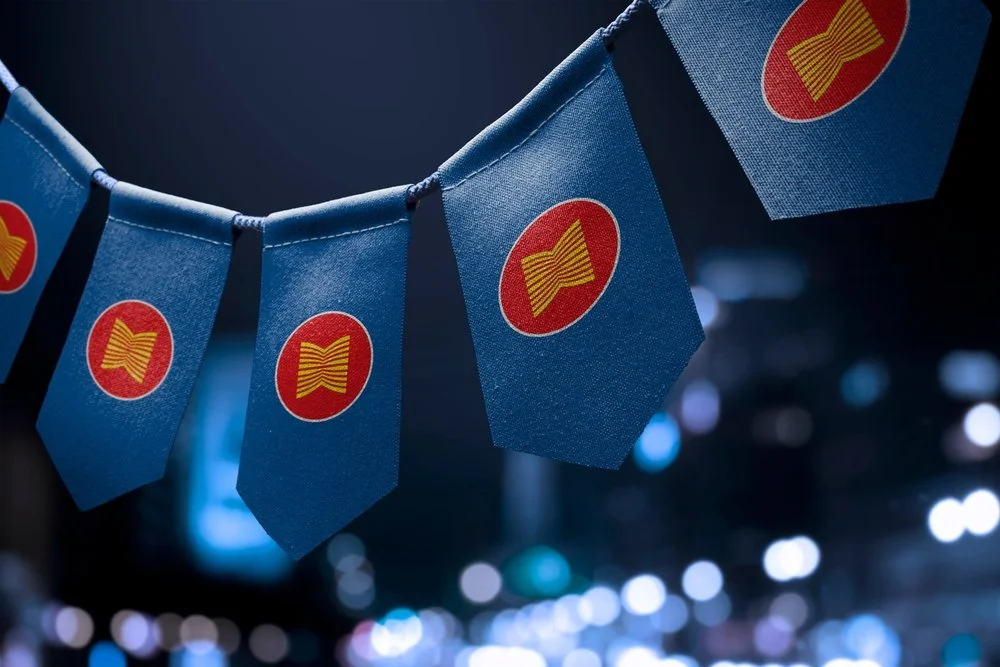
There has been growing awareness of the geopolitical importance of the Indo-Pacific. Rich in natural resources and astride the world's busiest shipping lanes, the region and its foremost intergovernmental agency, the Association of Southeast Asian Nations (ASEAN), are shifting in focus for the EU. But Brussels is not the only one paying attention: the Kremlin, too, is stepping up in the region, making time of the essence.
This is where the EU’s Global Gateway comes in. The strategy outlines the EU’s investment in digital, energy and transport projects to address some of the world’s greatest security, health and environmental challenges. It could increase cooperation and has the potential to secure Europe’s position in the region. But it needs a focus and a clear brand if it is to work.
All Together Now
With the Global Gateway, the EU pledge to mobilize over €300 billion for sustainable and high-quality global infrastructure. It relies on a “Team Europe” approach that combines the resources of the bloc’s institutions and member states. So far, over 250 flagship projects have been launched.
Brussels released its Global Gateway strategy for ASEAN in 2024, allotting €10 billion for a wide variety of projects to support the production of clean, affordable and secure energy, and to improve infrastructure. A prominent example is the Surabaya Regional Railway Line in Java, which is set to enhance connectivity for over 1.3 million people in its first two years of operation. The endeavor is worthy, but Brussels will need to do more to win over hearts and minds. This and other regional investments pale in comparison to EU undertakings in Africa, for which the bloc has allocated approximately €150 billion.
The need for greater action is urgent as the Indo-Pacific faces challenges from the fallout of the war between the United States and Iran. It was, after all, Moscow that was quick to respond after ASEAN officials recently expressed serious concern about rising oil prices and Middle Eastern instability. Russian Foreign Minister Sergey Lavrov, while attending the ASEAN foreign ministers’ meeting in July, reaffirmed Moscow’s willingness to cooperate "in the areas of politics and security [to combat] new threats and challenges".
The statement reflects a broader trend of growing Russian outreach to the Indo-Pacific. Faced with Western sanctions and mounting domestic pressures, Kremlin leader Vladimir Putin is increasingly engaging with ASEAN. These overtures are proving remarkably successful. Even the Philippines, among the United States’ closest allies, has signaled an intention to deepen cooperation with Moscow. While such moves reflect the pragmatic, nonaligned hedging favored by ASEAN members, Indonesia among them, Brussels cannot afford to ignore them.
Increasing Visibility
Europe is in a prime position to bolster its image and role since it already enjoys high levels of trust across the region. The 2026 State of Southeast Asia survey by the ISEAS–Yusof Ishak Institute found that 55.9% of respondents said they trust the EU to “do the right thing” to contribute to global peace, security, prosperity and governance, up four percentage points from the previous year. The bloc can build on this foundation to deepen ties in the region through mutually beneficial projects.
Cue Global Gateway—if this effort is strategically focused and recognizably European. The consequences of spending without coherent branding are already evident in Africa. The EU is the continent’s largest trade and investment partner but has lower visibility and a poorer reputation than competitors such as China and, in some cases, even Russia. Brussels must adapt its approach in the Indo-Pacific to avoid similar outcomes in the region.
Here, There and Everywhere
ASEAN’s newest member, Timor-Leste, is, like its cohorts, rich in natural resources including oil, gas and copper. Yet it remains one of Asia’s poorest countries. The EU, as Timor-Leste’s second-largest development partner, has allocated €85 million for grants to the country between 2021 and 2027. The funding supports a wide range of undertakings, from climate-resilient agroforestry and rural renewable energy to public-finance management, e-governance, gender equality, nutrition and trade.
This broad agenda reflects one of the two challenges confronting Global Gateway: insufficient focus. The EU must support projects that respond to local needs. In a country where roughly two-thirds of households depend on subsistence agriculture, improving climate-resilient agroforestry should be the priority. Investment in that area also helps the EU achieve its sustainability goals.
Regarding the second challenge—limited visibility—the EU must rethink its branding. The EU delegation in Timor-Leste is already doing this by turning to social media, using Facebook and Instagram to raise awareness of its projects. This approach builds on the EU’s existing positive image: In the ISEAS–Yusof Ishak Institute poll, 53% of respondents in Timor-Leste expressed trust in EU commitments to human rights and combating climate change.
Notably, the delegation also uses social media to inform the Timorese public about Russia’s war of aggression against Ukraine. This may be an effort to prevent increased cooperation with Moscow. While initially condemning the Kremlin’s invasion of Ukraine, Prime Minister Xanana Gusmão recently discussed opening a Russian embassy in Dili following the ASEAN–Russia summit in Kazan.
These moves may signal only a desire to maintain a diverse set of partnerships and not reflect any strategic alignment with Moscow, but they nevertheless underline a need for the EU to ensure that its substantial, existing engagement translates into lasting political relevance.
The bloc can do this by reorienting Global Gateway around partner-defined priorities, as the European Parliament urged it to do in March. The combination of clear branding and sustained on-the-ground political engagement could turn the initiative into a strategic ace up Europe’s sleeve.